Trending

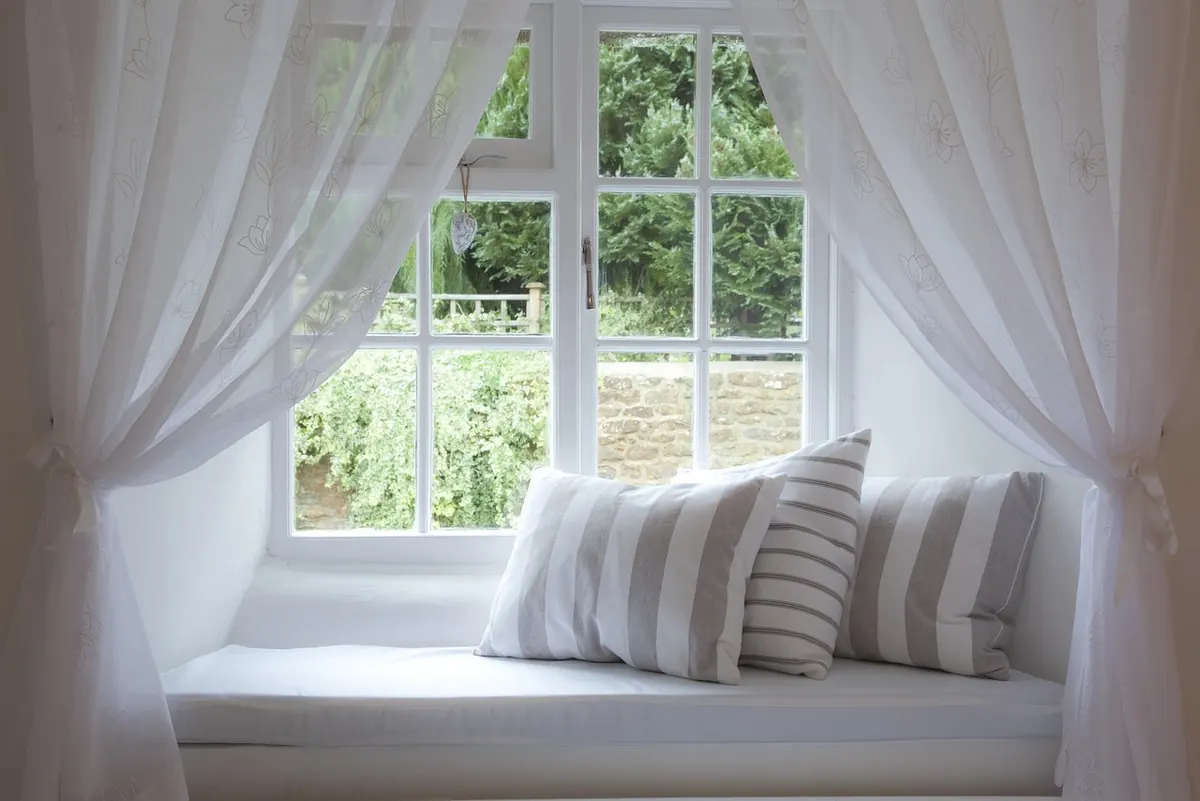
A corner of a small bedroom can hold a whole evening. It needs less than you think: somewhere comfortable to sit, a light that falls on the page, and a flat surface for a mug. Most reading nooks fail because they try to hold a bookcase's worth of things in a space the size of a doormat. Choose four pieces that work hard, angle them into the corner, and leave everything else out.
The result should feel like a room within a room, not a storage unit with a cushion on top.
Before you look at chairs, measure the space. Note where the door swings, where the radiator sits, how far the wardrobe door opens and which skirting board has a socket nearby. Those four details decide more about your nook than any cushion ever will.
As a rough guide, a compact armchair with a slim side table wants a footprint of about 90cm by 90cm, with the chair angled out from the corner rather than pushed square into it. You can work with 75cm square if the chair is slim and the lamp is mounted on the wall, but anything tighter starts to feel like an obstacle rather than a treat.
Mark the outline on the carpet with masking tape and live with it for a day before you buy anything. It sounds fussy. It saves you from the slow irritation of a chair you have to squeeze past forty times a week.
Look at seat depth first. Anything deeper than about 55cm swallows a shorter person and eats floor space. Narrow arms and a low back keep the corner open, and visible legs — wood, metal, anything that lifts the bulk of the chair off the carpet — make a small room read as bigger than it is.
Shapes that behave well in tight corners:
Avoid recliners, oversized club chairs and anything with a high, wide back. They block light from the window and make the corner feel like a dead end.
A padded bench along the wall, a deep window seat with a cushion, or a sturdy ottoman against the radiator all do the same job. Add a wall-mounted reading light and a floor cushion for your feet, and you have a nook that disappears when you are not using it.
Reading light should come over your shoulder and land on the book, not shine in your eyes or flood the whole bedroom. A slim floor lamp tucked behind the chair does this well; a plug-in wall light does it without using any floor at all.
Choose a warm white bulb, around 2700K, and make it dimmable if you can, so the corner can go from reading bright to bedtime soft. Angle the shade so the light falls across your shoulder rather than straight down onto the page.
Cables are the part everyone forgets. Run the flex along the skirting board with adhesive clips or a short length of trunking, and plug the lamp into a smart plug or timer so you are not crawling behind the chair every night.
You need somewhere for a mug, a book and your glasses — not a library. A floating shelf fixed at arm height, roughly 20cm deep, holds all three and costs you nothing at floor level. If you would rather not drill, a slim ladder shelf or a small side table with a lower shelf works just as well.
Keep the surface almost empty. A single stack of books laid flat, a small vase or a candle is plenty; clutter is what makes a small corner feel cramped.
What the nook should have within arm's reach:
One throw, folded over the chair back or the arm, is enough. Wool, cotton or a waffle weave all add texture without bulk; a chunky knit looks lovely but can make a small chair feel stuffed. Choose a colour that appears somewhere else in the room — the bedding, a curtain, a framed print — so the corner belongs to the bedroom rather than sitting in it.
Two cushions at most. A rectangular lumbar cushion gives your lower back something to lean into, which matters more than it sounds if you read for long stretches.
Leave a clear walking route. Around 60cm between the chair and the bed is comfortable; below 45cm and you will start avoiding the corner altogether.
Three habits keep a small nook feeling light:
If you rent, adhesive hooks and plug-in wall lights let you build the whole thing without touching the walls. Test any adhesive strip on a hidden patch of paint first; some finishes give way sooner than others.
Work in order: tape the footprint, place the chair, sit in it, then position the lamp and check the angle of light before you fix anything to the wall. Add the shelf and the throw last.
Then build a thirty-second reset into your evening. Fold the throw, drop the book into the basket, straighten the cushion. A nook stays inviting when the surface beside it is clear, and clearing it takes less time than deciding to.
Photo: samashdown / Pixabay